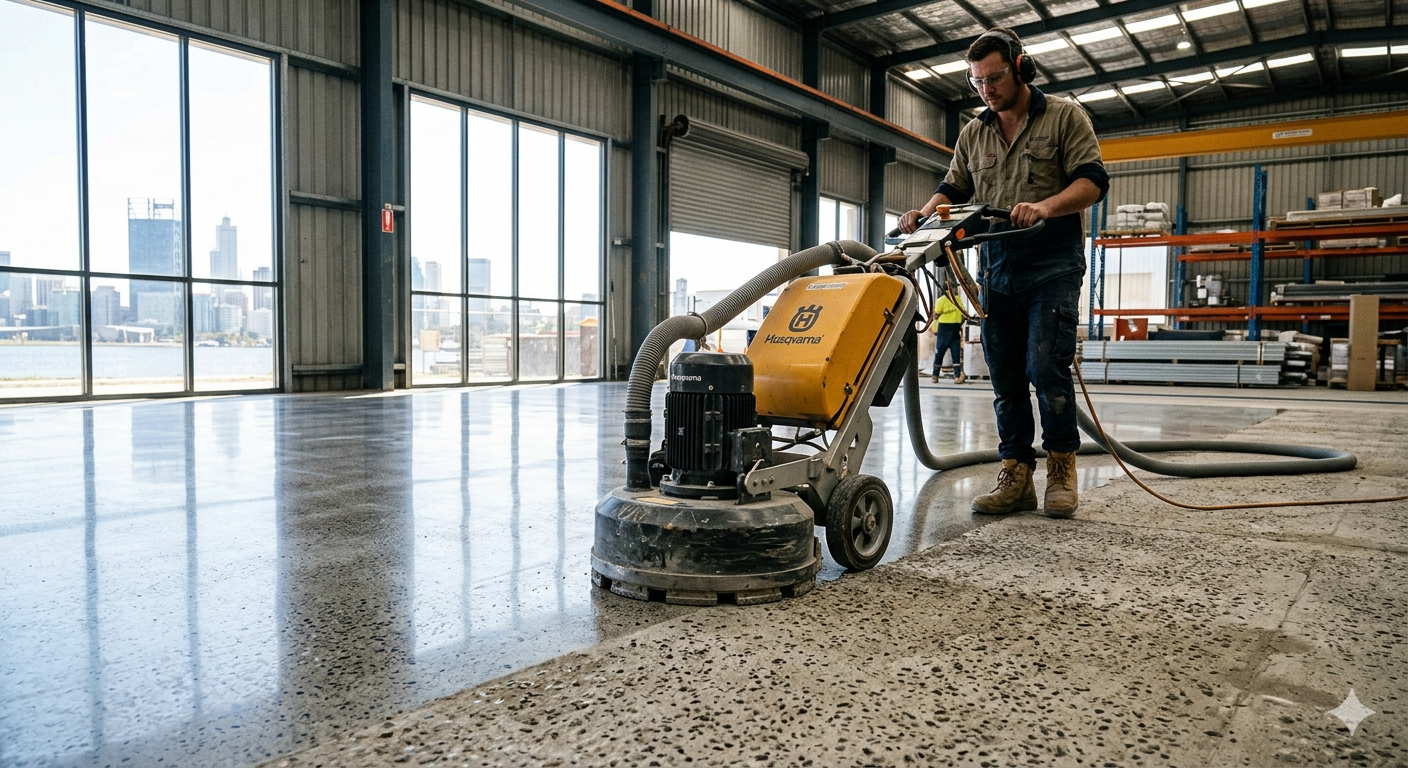
Concrete Grinding sounds simple until you’re standing in a Perth warehouse, staring at a stained slab, wondering whether to hire a machine for the weekend or drop several thousand dollars on one of your own. It’s a decision that trips up tradies, builders, property investors, and even seasoned contractors. Get it right and you save money, time, and a sore back. Get it wrong and you’re stuck with a heavy machine collecting dust in the shed, or worse, halfway through a job with the wrong gear.
This guide walks you through the real-world differences between hiring and buying a Floor Grinder in Perth. We’ll cover the costs people forget about, the project types that lean one way or the other, and the small mistakes that turn a straightforward grinding job into a frustrating mess. By the end, you’ll know exactly which option suits your situation, your budget, and the kind of work you do.
What Concrete Grinding Actually Involves
Before comparing hire and ownership, it helps to understand what you’re really signing up for. Concrete grinding is the process of using a rotating disc fitted with diamond-tipped segments to remove the top layer of a concrete slab. People grind concrete for plenty of reasons: removing old glue, paint, and epoxy coatings; smoothing out rough or uneven floors; preparing surfaces for sealing, polishing, or new coatings; and exposing aggregate for a decorative finish.
In Perth, the most common jobs we see involve garage floors, warehouse slabs, retail fit-outs, and residential renovations where someone has pulled up old vinyl or tiles and discovered a glue-stained mess underneath. Coastal homes also throw up their own challenges, especially older slabs with surface damage from salt and moisture.
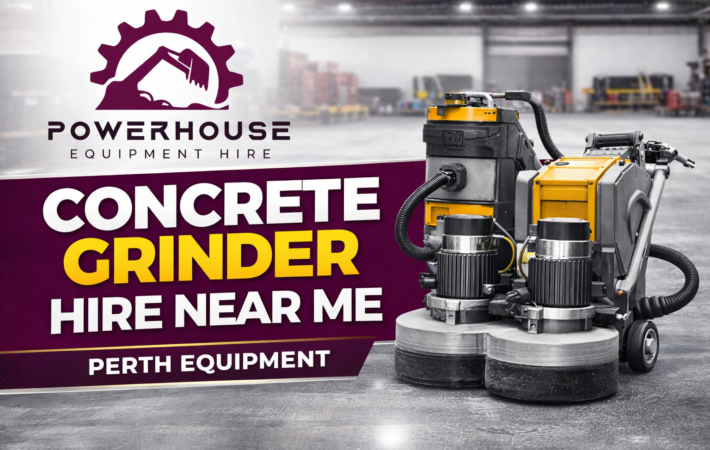
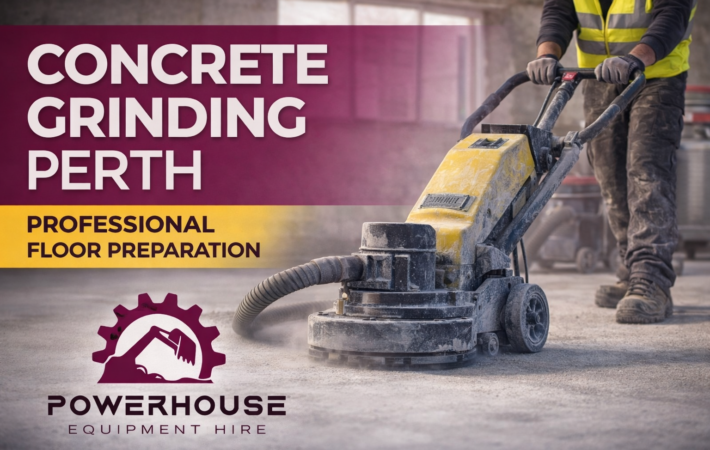
The work itself isn’t complicated, but it is physical. A planetary floor grinder typically weighs between 70 kg and 400 kg, depending on the model. The dust is fine, abrasive, and considered a health hazard, which is why a vacuum and proper PPE are non-negotiable. This is also where most DIYers underestimate the job.
The Case for Floor Grinder Hire in Perth
Hiring is usually the right call for one-off jobs or occasional use. Here’s why so many Perth homeowners and small contractors lean this way.
Lower upfront cost
A solid commercial-grade grinder can cost anywhere from $8,000 to $25,000 or more. Add a vacuum, diamond tooling, transport trolleys, and spare parts, and you’re easily looking at a $15,000 to $40,000 setup. Hiring a similar machine for a weekend, by comparison, often costs a few hundred dollars. For a single garage or one residential project, the maths is hard to argue with.
No storage headaches
Floor grinders are heavy, awkward, and don’t fit neatly into a domestic garage alongside the lawn mower and bikes. If you don’t have a workshop or shed with proper space, ownership becomes a logistical problem before you’ve even started the first job.
Always-current technology
Hire fleets are usually maintained, serviced, and refreshed. When you hire, you’re getting a machine that’s been checked, tested, and fitted with appropriate diamond segments for your job. You don’t have to worry about whether the bearings are tired or the motor is on its last legs.
No maintenance or repair costs
Bearings wear out. Gearboxes need oil. Diamond segments need replacing. When you own the machine, all of that is on you. When you hire, the rental company handles it.
Access to expert advice
Reputable hire companies in Perth will walk you through machine selection, recommend the right diamonds for your slab, and explain how to manage dust safely. That on-the-spot guidance can be the difference between a clean finish and a polished failure.
When Buying a Floor Grinder Makes Sense
Hiring isn’t always the smart move. For some operators, ownership pays off quickly.
High-volume, repeat work
If you’re a flooring contractor, polished concrete specialist, or builder doing grinding work most weeks, ownership starts making sense fast. Once your hire bill exceeds the cost of a machine over 12 to 24 months, you’re effectively paying off someone else’s equipment instead of your own.
Job control and scheduling
Owning your own grinder means you don’t have to compete for hire stock during peak periods. Anyone who’s tried to book equipment in Perth during a busy commercial fit-out season knows how quickly the good machines disappear from rental fleets.
Custom tooling setups
Serious operators often build up a collection of diamond segments tuned for specific concrete hardness levels, finishes, and stages of polishing. With your own machine, you can keep your tooling dialled in for the kind of work you do most often.
Long-term cost savings
For full-time use, ownership often works out cheaper per hour over the lifetime of the machine, especially if you maintain it properly and run it on commercial-grade jobs.
Hire vs. Buy: A Side-by-Side Comparison
Let’s break it down clearly.
Upfront cost
- Hire: Low. Pay per day, weekend, or week.
- Buy: High. Major capital purchase plus tooling and accessories.
Ongoing cost
- Hire: Predictable. You pay for what you use.
- Buy: Variable. Maintenance, repairs, replacement parts, insurance, transport.
Storage
- Hire: Not your problem.
- Buy: Requires secure, dry, accessible space.
Suitability for one-off jobs
- Hire: Excellent.
- Buy: Poor return on investment.
Suitability for daily use
- Hire: Costs add up quickly.
- Buy: Generally cheaper long-term.
Access to current models
- Hire: Usually well-maintained, modern fleet.
- Buy: You’re stuck with what you bought until you upgrade.
Tooling flexibility
- Hire: Limited to what’s on offer.
- Buy: Build your own collection over time.
Risk
- Hire: Almost none. Damage waivers usually available.
- Buy: All on you.
How to Work Out the Real Cost
A common mistake is comparing only the sticker price. The true cost of ownership includes a lot more than the machine itself.
When you buy, factor in:
- The grinder itself
- A suitable industrial vacuum (essential, not optional)
- Diamond segments at various grits
- Transport (most grinders won’t fit in a regular ute without ramps)
- Service and repair over time
- Storage space
- Insurance
- Eventual depreciation
When you hire, factor in:
- The day or weekend rate
- Vacuum hire (usually separate)
- Diamond consumables, if not included
- Transport or delivery fees
- Damage waiver
- Time spent picking up and returning gear
A good rule of thumb: if you grind concrete more than around 80 to 100 days a year, ownership likely wins. Below that, hiring almost always comes out ahead once all the hidden costs are included.
Project Examples: Which Option Suits Which Job?
Sometimes it’s easier to see the decision in real situations.
A homeowner removing tile glue from a single garage
This is a clear hire job. The slab might be 30 to 50 square metres, the work will take a weekend, and there’s no reason to spend thousands on a machine you’ll never use again.
A renovator flipping multiple Perth properties a year
If you’re touching slabs in three or four houses a year, hiring is still usually fine. Once you cross into ten or more projects with significant grinding, the conversation changes.
A flooring contractor polishing concrete full-time
This is an ownership scenario. Daily use, custom tooling, predictable scheduling, and the ability to take on bigger jobs without depending on hire availability.
A commercial builder running occasional grinding scopes
Mid-sized builders often land in a grey zone. A common compromise is a long-term hire arrangement, where the same machine is rented for weeks or months at a discounted rate, without the burden of ownership.
A landlord cleaning up a warehouse for a new tenant
One job, one weekend, one machine hire. Easy decision.
Common Mistakes People Make with Concrete Grinding
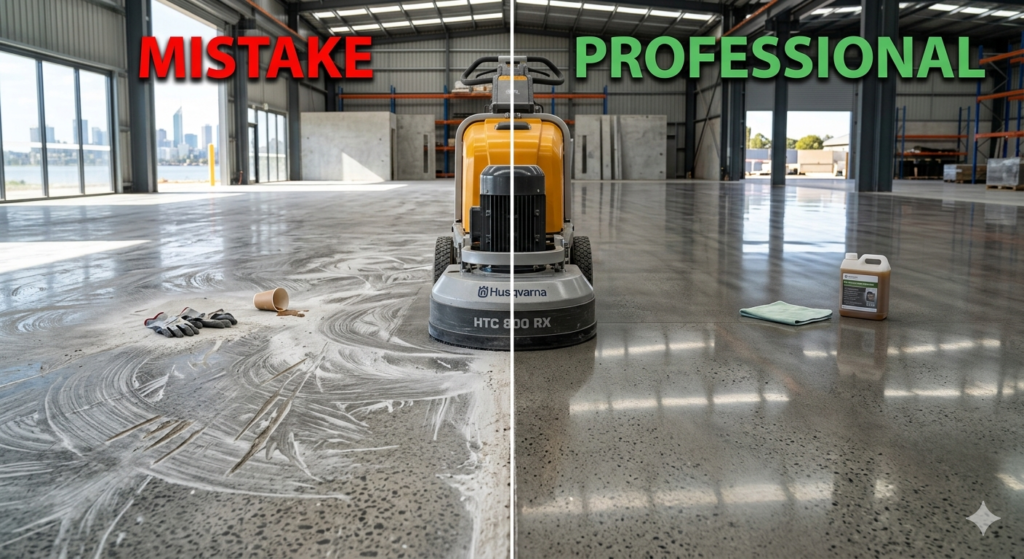
Plenty of jobs go sideways for the same handful of reasons. Here’s what to watch out for, whether you hire or buy.
Underestimating dust. Concrete dust contains crystalline silica, which is harmful to lungs. A proper HEPA-rated vacuum and well-fitted P2 mask are essential. Sweeping up afterwards isn’t enough.
Wrong diamond grit. Soft slabs need harder bond diamonds. Hard slabs need softer bonds. Use the wrong combination and you’ll either polish nothing or burn through tooling at an alarming rate.
Skipping the test patch. Always grind a small section first. It tells you how the slab is going to behave before you commit to a full pass.
Working without proper power supply. Larger three-phase grinders won’t run off a standard household outlet. Check the requirements before the machine arrives.
Forgetting edges. A walk-behind grinder can’t reach right up to walls. You’ll need an edge grinder or hand tool to finish corners and skirting lines.
Renting too small a machine. A tiny grinder on a big slab is a long, frustrating day. Match the machine to the job.
Ignoring the slab itself. Cracks, expansion joints, embedded fasteners, and uneven sections all change the plan. Walk the floor before you start.
If you’d like a deeper read on staying safe while operating one of these machines, our team has put together a full guide on Floor Grinder safety practices used on Perth job sites.
Hiring in Perth: What to Look For
Not all hire companies are equal. When choosing a Perth supplier, look for:
- A clean, well-maintained fleet with recent service records
- Honest advice on machine size and tooling, not just upselling
- Clear pricing, including any extras like delivery and damage waivers
- Vacuums and consumables available alongside the grinder
- Flexible hire periods, not just rigid daily rates
- Genuine local support if something goes wrong on site
Avoid hire outlets that hand over a machine without asking what you’re grinding. The right machine depends on the slab, the coating, the size of the area, and the finish you’re chasing.
Buying in Perth: What to Check Before You Commit
If you’ve decided ownership is right for you, take your time before buying.
Demo the machine first. Any reputable supplier will let you trial a grinder on a real slab before purchase.
Check parts availability. Cheap imports can be tempting, but if parts are slow to arrive from overseas, downtime will eat any savings.
Look at total system cost. Grinder, vacuum, tooling, and trolley should be considered as one package.
Talk to other operators. Perth’s concrete trade is small enough that asking around will quickly tell you which brands hold up and which ones don’t.
Plan for resale. Quality brands hold their value. Budget brands often don’t.
A Middle Path: Long-Term Hire
Many Perth contractors don’t realise there’s a third option between buying and weekend hire. Long-term equipment hire, sometimes called dry hire, lets you keep a machine on site for weeks or months at a discounted rate. It’s a useful option if you’ve got a large project, don’t want to tie up capital, and want a clean exit at the end of the job.
This works particularly well for warehouse fit-outs, multi-stage residential builds, and seasonal contractors who scale up and down through the year.
Tips for Getting a Better Finish, Either Way
A few small habits separate average grinding from professional results.
Overlap your passes. Roughly one-third overlap keeps the surface even and prevents lines.
Move steadily. Going too slow burns the slab. Going too fast leaves swirl marks.
Change direction between passes. Alternating north-south and east-west passes gives a more uniform finish.
Vacuum constantly. Dust under the diamonds reduces cutting efficiency and leaves a hazy surface.
Inspect tooling regularly. Worn segments cut unevenly and can damage the slab.
Plan your walk-out. Always grind from the back of the room toward the door, not into a corner.
These principles apply whether you’re using a hired machine for one weekend or your own gear for the hundredth time.
Sustainability and Health Considerations
Concrete grinding has come a long way from the dust-cloud days of decades past. Modern dustless systems, paired with HEPA vacuums, capture the vast majority of fine particles before they reach lungs and lungs nearby. In Perth, where many sites sit close to occupied homes, this matters.
If you’re grinding indoors, plan for:
- Sealed off rooms or zones
- Negative air pressure where possible
- Regular vacuum filter checks
- Proper PPE, including respiratory protection and eye protection
- Disposal of dust in sealed bags
Hiring from a supplier who provides modern, well-maintained dust extraction equipment is a simple way to stay compliant and keep workers healthy.
Soft CTA: Ready to Get Started?
If you’re still weighing up whether to hire or buy, the simplest next step is to talk to a Perth-based equipment specialist about your specific job. Share the size of the slab, what’s on it, and what finish you’re after. A good supplier will tell you honestly whether a weekend hire, a long-term arrangement, or a purchase makes the most sense for your situation.
Whether it’s a single garage or a full warehouse refit, the right machine and a bit of expert advice can turn a daunting job into a straightforward one.
Conclusion
Concrete Grinding doesn’t have to be complicated, expensive, or risky. The choice between Floor Grinder hire and buying in Perth comes down to how often you’ll use the machine, how much capital you want to tie up, and how much you value flexibility versus control. For most homeowners, renovators, and occasional users, hiring offers the best balance of cost, convenience, and access to current equipment. For full-time contractors and high-volume operators, ownership eventually pays for itself, especially when paired with a properly built tooling kit. Whichever path you take, success in Concrete Grinding comes from matching the machine to the job, respecting the dust, and giving the slab the time and care it deserves. Make that decision well, and the rest of the work becomes a lot easier.
FAQs
1. Is hiring a floor grinder in Perth cheaper than buying? For one-off or occasional jobs, hiring is almost always cheaper once storage, maintenance, and tooling costs are included.
2. How long does concrete grinding take? Most residential garages take a half to a full day, while larger commercial slabs can run several days depending on coatings and finish.
3. Do I need a special power supply for a floor grinder? Smaller machines run on standard power, but larger commercial grinders usually require a three-phase supply on site.
4. Can I grind concrete without a vacuum? No. Dustless grinding with a HEPA vacuum is essential for health, safety, and a clean finish.
5. How often should diamond segments be replaced? It depends on slab hardness and usage, but heavy commercial use can wear segments out within days, while occasional jobs may last months.
6. Should I hire or buy if I grind concrete a few times a year? Hiring is the smarter option until your annual usage clearly exceeds the cost of owning, servicing, and storing your own machine.
Leave a comment
Your email address will not be published. Required fields are marked *