


You’ve picked up a floor grinder from the hire yard, cleared out the room, and you’re ready to get going. But before you switch it on — are you actually set up safely?
Most people skip that question. The job looks simple enough. You push the machine, the floor gets done, sorted. But floor grinders come with real risks that aren’t obvious until something goes wrong — flying debris, serious noise exposure, and most dangerously, invisible silica dust that can permanently damage your lungs.
The good news is that staying safe doesn’t have to be complicated. A bit of preparation before you start will save you time, money, and a whole lot of stress. This guide covers everything — the right gear to wear, how to set up your space, how to control dust, how to actually operate the machine, and the mistakes most Perth homeowners make on the job.
| 📞 PowerHouse Hire — Perth’s Equipment Specialists Not sure which machine suits your job? Call PowerHouse Hire — we’ll sort you out with the right grinder, vacuum, and accessories before you start. |
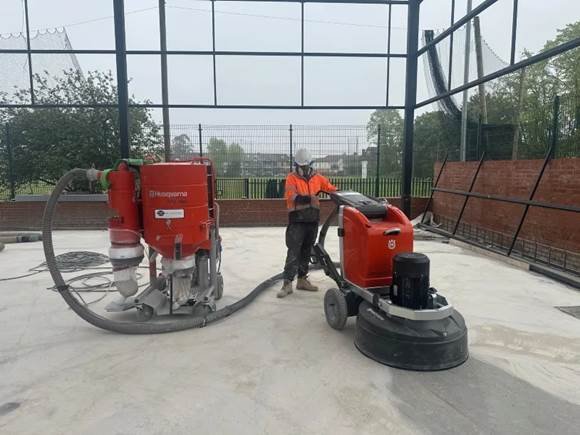
Professional floor grinding setup — full PPE and HEPA vacuum in use
Why Floor Grinder Safety Matters in Perth
SafeWork WA takes floor grinding seriously — and so should you. Whether you’re a DIYer or a small tradie, the rules around powered surface preparation tools apply to everyone working in Western Australia.
The biggest risk that most people don’t know about is silica dust. When you grind concrete, tiles, or stone, you release tiny particles of crystalline silica into the air. You can’t see them. You won’t feel them at the time. But years down the track, they can cause silicosis — a permanent, progressive lung disease with no cure. SafeWork WA has flagged silica dust as a priority health issue across the WA construction sector.
Beyond the dust, there are other real consequences of cutting corners on safety:
- Eye injuries from flying concrete chips and debris
- Permanent hearing damage from sustained noise exposure
- Gouged or damaged floors that cost more to repair than the original job
- Fines and liability if you’re on a job site and not following WA safety requirements
This guide is written for DIY homeowners, weekend renovators, and small tradies who want to do the job properly without overcomplicating it.
PPE — What You Need to Wear
A floor grinder — also called a concrete grinder, surface grinder, or disc grinder — throws debris, creates noise, and generates fine dust from the moment you turn it on. Your protective gear is the first thing to sort out before you even plug the machine in.
Eye Protection
Safety glasses aren’t enough here. Wear full wrap-around goggles or a face shield. A stray fragment of concrete at grinding speed can cause serious eye damage in an instant.
Ear Protection
Most floor grinders run at 85 to 100 decibels — well above the threshold for hearing damage. Wear foam earplugs or earmuffs for the entire duration of the job, not just when it gets loud.
P2 Respirator Mask
A standard dust mask or surgical mask won’t cut it — silica particles are too small. You need a P2-rated (or N95) respirator that fits snugly against your face with no gaps.
| 💡 Pro Tip Never skip the respirator — silica dust is invisible and the damage is permanent. A good P2 mask costs next to nothing compared to what silicosis costs you. |
Steel-Capped Boots
Floor grinders are heavy. If the machine slips or you drop a disc, steel-capped boots are what stand between you and a serious foot injury.
Gloves and Clothing
Wear cut-resistant gloves when handling diamond discs and attachments. Avoid loose clothing, untied hair, or anything that could catch in the rotating parts of the machine. Keep it fitted and practical.
Setting Up Your Work Area
Ten minutes of setup before you start will save you far more than ten minutes of problems later. Here’s what to do:
- Clear the area completely — move furniture, rugs, and anything else out of the room. Dust travels much further than you’d expect.
- Check for live cables under the floor — use a cable detector before you start grinding. This is non-negotiable. Hitting a live electrical cable is dangerous and potentially fatal. If you’re unsure, call an electrician first.
- Sort out ventilation — open windows and doors. In an enclosed space, use a fan to push air out. Even with a good mask and dust shroud, ventilation adds an important layer of protection.
- Wet or dry grinding — wet grinding suppresses dust and keeps the disc cooler, good for harder surfaces. Dry grinding with a dust shroud and HEPA vacuum is more practical indoors where water would cause damage. Know which one your job calls for.
- Mark your work zone — especially if you’re working near a doorway or in a shared space. Tape or cones work fine.
- Keep everyone else out — no kids, no pets, no one without full PPE in the work area while the machine is running.
Dust Control — The Part Most Perth DIYers Get Wrong
This is the area where most people come unstuck. They grab the grinder and worry about the mess later. That approach is both dangerous and ineffective.
What’s the Risk with Silica Dust?
Crystalline silica is found in concrete, stone, brick, tiles, and sand. Grinding or cutting these materials produces fine particles called respirable crystalline silica (RCS). These particles travel deep into your lungs and your body can’t remove them. Long-term exposure causes silicosis, lung cancer, and COPD — all serious, all preventable.
What SafeWork WA Requires
Under WA safety guidelines, you must have dust control measures in place when grinding silica-containing materials. That means either wet grinding or dry grinding with a properly fitted dust shroud connected to a HEPA-rated vacuum.
Why a HEPA Vacuum is Non-Negotiable
A regular shop vac or household vacuum won’t capture silica particles — they’re too small, they pass straight through and blow back into the air. You need a HEPA-rated vacuum designed to capture particles as small as 0.3 microns.
| 💡 Pro Tip Hire your vacuum at the same time as your grinder — PowerHouse Hire has both. Starting with the right vacuum means you’re covered from the first pass. |
Fitting the Dust Shroud
Your grinder should have a dust shroud — a hood that sits over the disc and connects to the vacuum hose. Make sure it’s fitted with no gaps. A poorly seated shroud can actually push dust out rather than capturing it.
Cleaning Up After
Don’t sweep up with a broom — that just throws silica particles back into the air. Use your HEPA vacuum to collect all dust and debris. Wipe surfaces with a damp cloth. Seal vacuum waste in a plastic bag before binning it.
How to Operate a Floor Grinder — Step by Step
A floor grinder works by rotating one or more diamond-impregnated discs against the floor surface at high speed. It’s used to smooth, level, and prepare concrete and stone floors for polishing, tiling, or coating. Here’s how to use one safely:
- Inspect the machine — check the power cord for damage, make sure all guards are fitted, and confirm the dust shroud is properly attached.
- Check the diamond disc — a worn or cracked disc is both a safety hazard and will give you a poor result. If it looks damaged, don’t use it.
- Start on the floor — place the grinder down before switching it on. Starting it mid-air can cause you to lose control when the disc engages.
- Hold it properly — both hands on the handles, feet shoulder-width apart, back straight. Let the weight of the machine do the work rather than pushing down hard.
- Work in consistent passes — move in slow, overlapping lines. Avoid random circular motions which create uneven patches.
- Don’t rush — moving too fast means the disc doesn’t have time to work the surface. Too slow and you risk overheating the disc or damaging the concrete.
- Use a handheld grinder for edges — never try to force a large floor grinder into corners. A 4-inch angle grinder handles edges and tight spots much more safely.
- Take breaks — grinding is physical work. Step away every 20 to 30 minutes, check your progress, and let the machine cool down.
- Switch off before lifting — turn the machine off and wait for the disc to fully stop before you move or adjust anything.
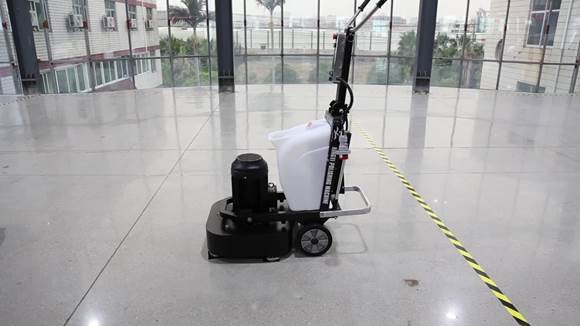
Commercial floor polishing machine — used for large surface preparation jobs
Common Mistakes Perth Homeowners Make
These are the mistakes that end up costing time, money, or health — and they come up again and again.
| ⚠️ Mistake: Skipping PPE for a small job Silica dust doesn’t care how many square metres you’re grinding. A short session in a small room can still expose you to dangerous levels. Respirator, goggles, and ear protection — every single time. |
| ⚠️ Mistake: Not hiring a vacuum Running a floor grinder without a HEPA vacuum isn’t just messy — it may put you in breach of SafeWork WA requirements. Always pair the grinder with the right vacuum. |
| ⚠️ Mistake: Wrong machine size A 4-inch grinder has a disc diameter of around 100mm — great for patch repairs, edges, and tight spaces, but far too small for a full garage floor. Match the machine to the job. |
| ⚠️ Mistake: Grinding too fast Speed kills the finish. Rushing leaves swirl marks, uneven patches, and low spots that are expensive to fix. Slow, steady passes give a far better result every time. |
| ⚠️ Mistake: Not checking for underfloor cables Use a cable detector before you grind any concrete floor. This is one of those mistakes you only get to make once. |
| ⚠️ Mistake: Using worn diamond discs Diamond discs wear out. When they do, they work poorly and can overheat or crack under pressure. Inspect before every use and replace when they look worn. |
| ⚠️ Mistake: No ventilation Even with a HEPA vacuum and dust shroud, a sealed room concentrates dust, heat, and noise. Open the windows, open the door, and get some air moving. |
Choosing the Right Floor Grinder for Your Job
Picking the wrong machine is one of the main reasons jobs drag on and costs blow out. Here’s how to think about it.
What Is a Floor Grinder Used For?
A floor grinder is used for levelling uneven concrete, stripping old coatings, adhesives, and paint, smoothing rough surfaces, and preparing floors for polishing, tiling, or epoxy coatings. It’s also used to remove trip hazards and high spots.
Single Disc vs Dual Head
For beginners, a single disc grinder is easier to handle and more forgiving. Dual-head machines cover more area and produce a more consistent finish, but they’re heavier and take more experience to control well. If it’s your first time, start with single disc.
When to Use a Handheld Grinder
A handheld angle grinder is the go-to for edges, corners, stairs, and anywhere the floor grinder can’t reach. A 4-inch grinder — with its 100mm disc — is the most common size for this kind of detail work. Fit it with a diamond cup wheel for concrete.
Domestic vs Commercial Jobs
For home jobs — a garage floor, a laundry, a small area of concrete — a light-duty single disc grinder does the job well. Larger areas, harder surfaces, or more aggressive material removal need heavier-duty equipment with more power and a wider grinding path.
How much material can a floor grinder actually remove? On a single pass, most concrete grinders remove between 1mm and 3mm depending on disc grit, machine weight, and speed. For more aggressive work — removing a high spot or stripping a thick coating — plan for multiple passes with progressively finer grits.
| 📞 PowerHouse Hire — Perth’s Equipment Specialists Not sure what machine you need? PowerHouse Hire’s team will match you with the right grinder, disc, and vacuum for your job. Browse our hire catalogue or give us a call — we’ll have you sorted before you leave the yard. |
After the Job — Cleanup and Equipment Return
The job isn’t finished when the grinder stops. Proper cleanup and care when returning equipment matters.
- Vacuum up all dust — use your HEPA vacuum, not a broom. Wipe surfaces down with a damp cloth to pick up any remaining fine particles.
- Dispose of waste properly — seal dust and debris in a plastic bag before binning it. If you’ve been grinding a surface with old paint or adhesive, check whether it needs to be treated as hazardous waste.
- Inspect the machine — check the disc, housing, power cord, and dust shroud before returning. If something’s damaged, flag it upfront.
- Report damage honestly — if anything went wrong during the hire, let PowerHouse Hire know. We’d rather sort it out before the next customer uses the machine.
- Clean your PPE — wipe down your goggles, wash your gloves, and store your respirator in a clean bag. Contaminated gear can still expose you after the job is done.
Perth-Specific Safety Rules You Should Know
If you’re in Western Australia — whether it’s a home reno or a small commercial job — a few key regulations are worth understanding.
SafeWork WA enforces workplace health and safety under the Work Health and Safety Act 2020 (WA). While this legislation is focused on workplaces, homeowners and DIYers still carry a duty of care to themselves and anyone around them during the work.
- Crystalline silica is classified as a hazardous substance under WA law. Grinding concrete, tiles, or stone without dust control measures in place is a breach of your duty to manage risk.
- SafeWork WA has issued specific guidance on silica dust in construction — this covers tradies and DIYers working with silica-containing materials.
- If you’re a tradie on a job site, your principal contractor may require proof you’re following safe work practices — including use of a HEPA vacuum and fitted dust shroud.
- Perth’s heat is an added hazard. Working in a sealed garage or shed in summer without ventilation can cause heat stress quickly. Take breaks, drink water, and keep the space ventilated.
- Noise restrictions apply in Perth residential areas. Most local councils restrict loud power tools during early mornings, late evenings, and Sundays. Check your local council’s rules before you start up early.
Following these rules isn’t about paperwork. It’s about making sure you, your family, and your neighbours are actually safe.
| Ready to Get Started? PowerHouse Hire Has You Covered. Whether it’s a small domestic grind or a larger surface prep job, PowerHouse Hire stocks the equipment you need — floor grinders, HEPA vacuums, diamond discs, and everything in between. Our team will help you pick the right machine and make sure you’re set up properly before you leave. Call us today or browse our hire catalogue online. Let’s get your floor done right. |
Leave a comment
Your email address will not be published. Required fields are marked *